Quick Answer
One small instruction helped change the course of malaria treatment: soak the herb and wring out its juice.
It appeared in a Chinese medical text written more than 1,600 years ago. When Tu Youyou encountered that instruction during China's search for a new malaria treatment, she noticed something easy to miss: the text did not say to boil the plant.
That detail made her reconsider the team's extraction method. Could heat be destroying the part they were trying to find?
Tu Youyou did not discover a finished modern drug inside an ancient book. She discovered a better question. Her team followed that question through a changed extraction process, repeated experiments, separation, purification and clinical research. The compound that emerged became known as artemisinin.
Who This Is For
Read this if you have ever wondered whether traditional Chinese medicine has made a contribution to modern medicine that can be traced and verified.
It is also worth reading if you are tired of the usual argument in which one side treats every ancient remedy as unquestionable truth and the other treats every old medical record as superstition. The artemisinin story is more interesting than either position.
What to Remember
- The ancient text supplied a practical clue, not a finished drug.
- The decisive detail concerned preparation: soaking rather than high-temperature processing.
- Tu Youyou's team had to turn the clue into a repeatable result and then isolate the active compound.
- Artemisinin did not validate every claim made in the name of TCM. It showed why inherited medical knowledge deserves careful reading rather than automatic belief or dismissal.
- Modern malaria treatment uses quality-assured artemisinin-based combination therapies, not homemade qinghao preparations.
The Story Is Usually Told Too Quickly
Most accounts jump from “ancient Chinese text” to “Nobel Prize” in a few sentences. That makes the discovery sound almost magical.
The real story began with frustration.
In 1967, China organised a nationwide antimalarial research programme known as Project 523. Malaria was taking lives, existing medicines were losing effectiveness, and a new treatment was urgently needed. Two years later, Tu Youyou was appointed to lead a group at the Institute of Chinese Materia Medica in the search for possible answers within Chinese medicine.
Her team did not begin with one famous herb. They searched widely. Tu's own account describes reviewing more than 2,000 traditional preparations and compiling 640 prescriptions for closer study. Hundreds of herbal extracts were tested.
Some showed no useful result. Others looked promising and then failed when the experiment was repeated.
That was what happened with qinghao.
A Promising Result That Would Not Behave
Early qinghao extracts sometimes inhibited malaria parasites in animal experiments. Then the effect weakened. A result would appear, disappear and refuse to become reliable.
Imagine seeing the possibility of an important medicine, but being unable to make it work twice in the same way. It would have been easy to discard the plant as another failed lead.
Tu did the opposite. She returned to the literature.
This choice is one of the most important parts of the story. She did not return to the old books for a ceremonial quotation. She returned because the experiment was telling her that something in the method was wrong.
The Clue Hidden in the Way a Herb Was Prepared
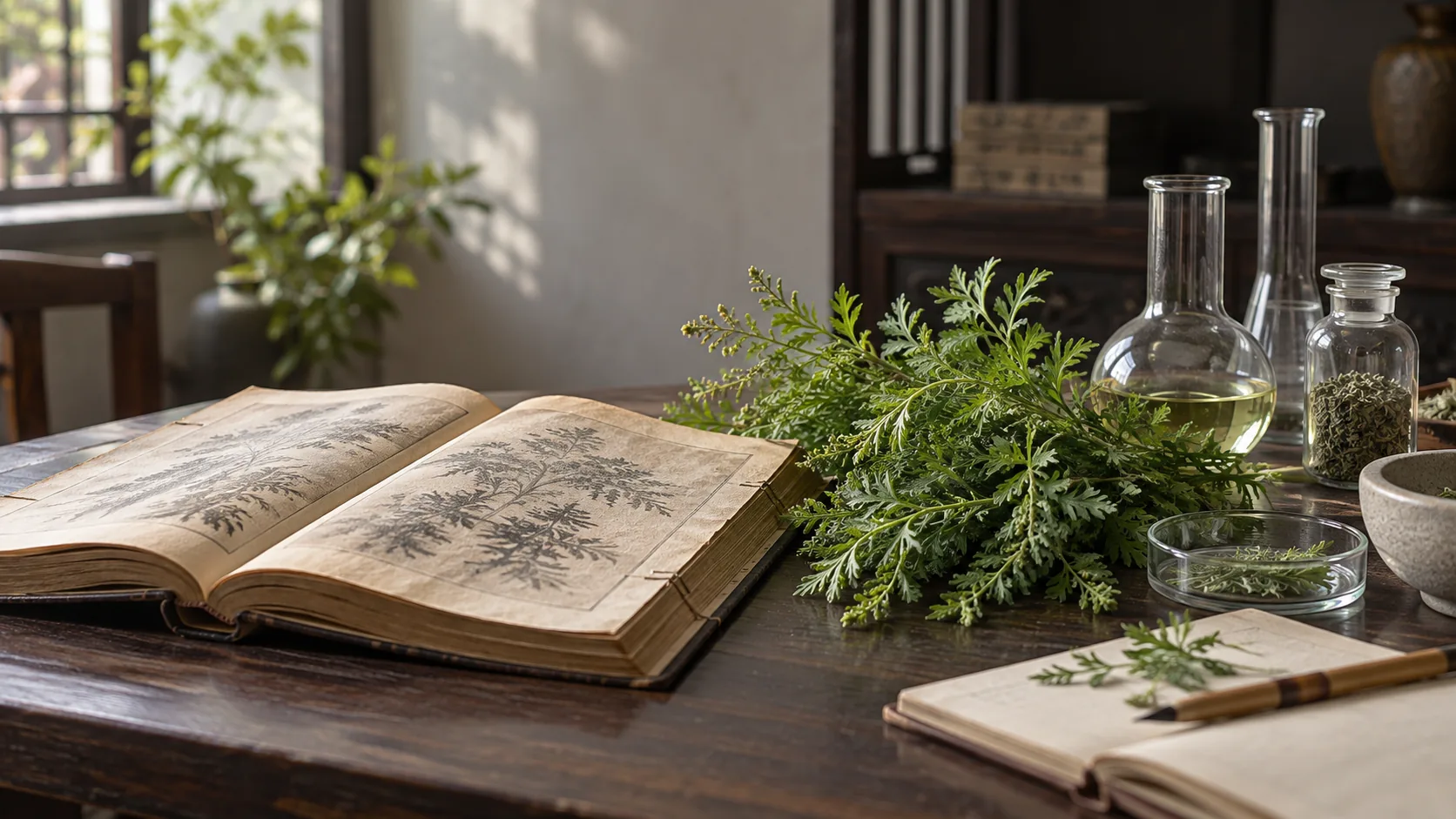
In Ge Hong's A Handbook of Prescriptions for Emergencies, a work associated with the fourth-century Eastern Jin period, Tu found an instruction involving qinghao: soak it in water, wring out the juice and take the liquid.
The sentence was brief. Its importance lay in the action.
Chinese herbs are often prepared by boiling. The researchers had also been using processes involving heat. But Ge Hong's method did not boil the qinghao. Tu wondered whether high temperature was damaging a heat-sensitive component.
That question changed the experiment.
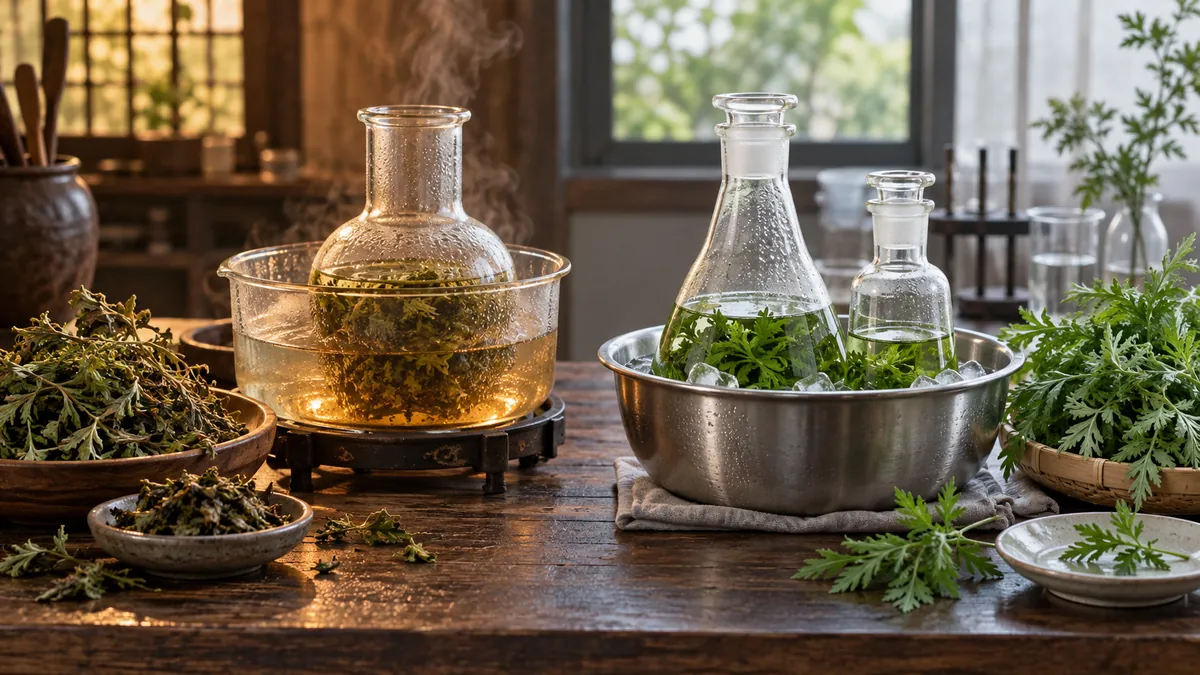
Her team moved to a lower-temperature extraction process. On 4 October 1971, the sample later known as number 191 showed complete inhibition of malaria parasites in the rodent model recorded in Tu's Nobel biography. Further work separated a toxic acidic portion from a neutral portion that retained the antimalarial effect in animal testing.
The breakthrough did not come from copying the old prescription word for word. It came from understanding why one small detail might matter.
The Ancient Book Opened the Door. Research Had to Walk Through It.
Sample 191 was still not a medicine ready for the world. The team had much harder work ahead:
- Repeat the result.
- Reduce toxicity.
- Investigate whether the extract could be used in people with malaria.
- Isolate the active component.
- Work out its chemical structure.
- Turn the discovery into medicine that could be produced and used reliably.
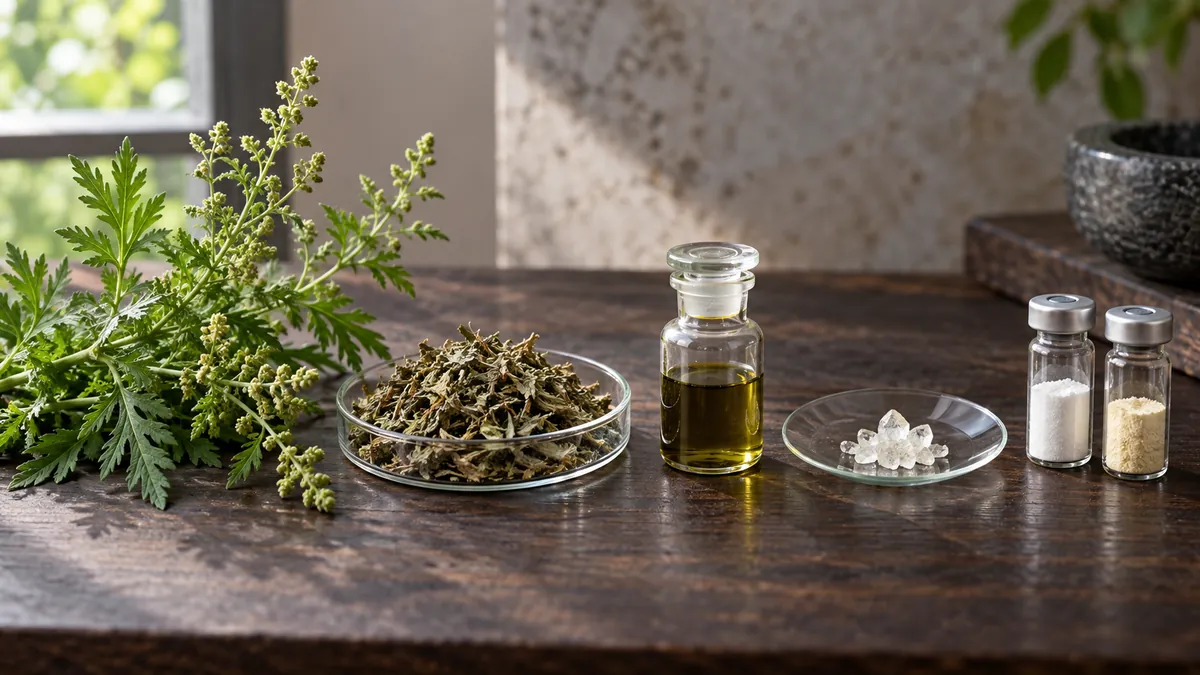
Tu and her colleagues continued with safety work and early clinical investigation. They isolated crystals in 1972. The active compound became known as qinghaosu in Chinese and artemisinin in English. Researchers at several Chinese institutions contributed to determining its structure and developing related medicines.
In 2015, Tu Youyou received half of the Nobel Prize in Physiology or Medicine for her discoveries concerning a novel therapy against malaria.
The Nobel Prize did not honour an old book merely for being old. It recognised what happened when a researcher took inherited knowledge seriously enough to question it, test it and carry it further.
What Chinese Medicine Contributed
The contribution was not simply the name of a plant. The old text preserved a way of handling that plant.
This distinction matters. A medicinal material is affected by species, place of growth, harvesting time, processing, temperature, combination and dose. Two preparations with the same herb name may not be the same in practice.
Ge Hong's short instruction carried an observation from one age into another. Tu Youyou recognised that the observation might contain information, and modern research gave that information a form that could be isolated and tested.
Tradition preserved the clue. Research made the clue answerable.
What We Should Not Turn the Story Into
The artemisinin discovery is powerful enough without exaggeration.
It does not mean every old formula is effective. It does not mean a herb, a laboratory extract, an isolated compound and a regulated medicine are interchangeable. It certainly does not mean that someone with suspected malaria should drink qinghao tea and wait.
The World Health Organization recommends quality-assured artemisinin-based combination therapies for malaria. It does not support using Artemisia plant material, including teas, tablets or capsules, for malaria prevention or treatment. Using oral artemisinin alone can also contribute to drug resistance.
These limits do not weaken the Chinese contribution. They make the real achievement clearer.
Why This Story Matters Beyond Malaria
China's medical inheritance is not valuable because it is ancient. It is valuable when it preserves observations, distinctions and methods that still help us ask better questions.
Recovering that value requires more than repeating classical words. Someone must understand the language, identify the right material, notice how it was prepared, recognise the clinical context and know which parts remain uncertain.
Tu Youyou did not choose between tradition and science. She read the tradition closely enough to let it change the scientific method.
That is also a useful way to approach TCM in China today. Do not be impressed only by an ancient quotation, a famous title or a grand claim. Look for the person who can explain why a method fits this patient, what experience supports the judgement, what should be observed next and where the limits are.
Five Questions to Ask When You Hear a TCM Success Story
You do not need to accept or reject the story immediately. Ask:
- *Where did the claim begin?* Look for the original text, medical record, practitioner account or research paper.
- *What was actually observed?* Separate the original event from the story added later.
- *What exactly was used?* A plant, formula, extract, isolated compound and finished medicine are different things.
- *What changed along the way?* Species, preparation, dose and combination may completely alter the result.
- *How large a conclusion does the evidence support?* A specific success should lead to a specific conclusion, not a promise about everything.
This way of asking questions leaves room for discovery without making you easy to mislead.
KONGTONG LIVING Perspective
The sentence we remember from this story is not “an ancient book had every answer.” It is this: the answer appeared because someone knew how to listen to the old record and how to question it.
That is how KONGTONG LIVING wants to introduce Chinese medicine to the world. We look for the source, but we also look for the living practitioner. We respect inherited methods, but we ask how they are understood and used today. We care about clinical experience, especially the experience accumulated by practitioners whose ability may be known through generations of patients rather than international fame.
Chinese medicine is ultimately practised by people, not by slogans. The right question is rarely just “Does TCM work?” A better question is: who understands this particular problem, how do they judge the whole person, and what can they responsibly do next?
Frequently Asked Questions
Did Tu Youyou find artemisinin directly in an ancient book?
No. The book provided a clue about preparing qinghao. Tu used that clue to reconsider high-temperature extraction. Her team then carried out the experiments needed to obtain a reliable extract, isolate the active compound and develop it further.
Which Chinese text gave her the clue?
The passage came from Ge Hong's A Handbook of Prescriptions for Emergencies, known in Chinese as Zhouhou Beiji Fang (肘后备急方).
Is qinghao the same as artemisinin?
No. Qinghao is a Chinese medicinal name associated in this history with Artemisia annua L. Artemisinin is a specific compound isolated from the plant. Plant material, an extract, an isolated compound and a finished medicine should not be confused.
Can qinghao tea treat malaria?
WHO does not recommend Artemisia plant material for preventing or treating malaria. Anyone who may have malaria needs prompt testing and appropriate professional treatment.
Does this discovery prove that all TCM treatments work?
No. It documents one major contribution: a traditional preparation record gave modern researchers a decisive clue. Every other treatment still needs to be understood and judged on its own evidence, experience, method and safety.
Why is this considered a Chinese medicine contribution?
The research began with knowledge recorded in Chinese medical literature and a plant long used within that tradition. The preparation detail in the text helped Tu change the extraction method that led to the breakthrough.
Useful Terms
- Qinghao (青蒿): a Chinese medicinal name associated in this history with Artemisia annua L.
- Qinghaosu (青蒿素): the Chinese name for artemisinin.
- Zhouhou Beiji Fang (肘后备急方): Ge Hong's A Handbook of Prescriptions for Emergencies.
- Project 523: China's nationwide antimalarial research programme initiated in 1967.
- Extraction: a process used to separate components from plant material.
- Artemisinin-based combination therapy (ACT): treatment combining an artemisinin derivative with a partner antimalarial medicine.
A Necessary Boundary
This article explains the history of a medical discovery. It is not a guide to self-treating malaria, using qinghao, purchasing artemisinin or changing prescribed treatment. Malaria can become life-threatening quickly. Anyone who may have malaria should seek prompt testing and professional medical care.
Primary References
- Tu Youyou's Nobel Prize biographical account
- Tu Youyou's Nobel Lecture: Artemisinin - A Gift from Traditional Chinese Medicine to the World
- The Nobel Prize scientific background for the 2015 award
- Tu Youyou, The discovery of artemisinin (qinghaosu) and gifts from Chinese medicine
- World Health Organization: malaria treatment
Bring Us the Question You Cannot Yet Answer
If you are trying to understand a TCM treatment, practitioner or medical tradition in China, tell KONGTONG LIVING what you have found and what still feels uncertain. The first conversation with our platform team is free. We will help you separate the original source, the later story and the practical question that needs to be answered next.
KONGTONG LIVING’s greatest strength is our deep knowledge of China’s most accomplished TCM practitioners. If you need any help, contact us and we will assist you.