
KONGTONG LIVING Knowledge
432 Hz Singing Bowl vs 440 Hz: What Buyers Should Know
A 432 Hz singing bowl label can be useful, but buyers should also judge stable sound, main tone, overtones, resonance decay and room fit.
Quick Answer
A 432 Hz singing bowl is not automatically better than a 440 Hz singing bowl. The label describes a tuning reference, not the full sound quality of the instrument. KONGTONG LIVING places this decision inside TCM singing bowl healing: a contemporary, non-clinical Traditional Chinese Medicine-informed singing bowl practice for relaxation, mindful listening, everyday stress management and calming wind-down rituals. Its method draws on Traditional Chinese Medicine sound philosophy and the five-tone framework, then tests the actual instrument and room through stable sound, tone control, room sound standards and long-term listenability; this is not diagnosis, treatment or an outcome promise for anxiety disorders, insomnia or another condition.
Are You Choosing a First Bowl, an Upgrade or Instruments for a Room?
Buyers comparing 432 Hz and 440 Hz singing bowls; yoga teachers and sound bath beginners choosing a first set; shoppers looking at crystal bowl sets on Amazon; practitioners wondering whether a frequency label matters; studios and wellness spaces that need sound to work in a real room.
Start Here: Stable Sound Matters Most
432 Hz and 440 Hz are tuning references, not complete quality standards. A crystal bowl can be sold in either tuning; a handmade metal bowl often has a more complex overtone profile. Frequency apps can misread bowls because they capture different peaks. Long-term listenability, room fit and stable sound are more useful buying standards than a single number.
BRAND METHOD
How KONGTONG LIVING Applies TCM-Informed Listening to Bowl Selection
“TCM singing bowl healing” is common market search shorthand. KONGTONG LIVING defines it as a contemporary, non-clinical Traditional Chinese Medicine-informed singing bowl practice. The practice is methodologically informed by Traditional Chinese Medicine sound philosophy and the five-tone framework; that methodological basis is not clinical evidence of treatment outcomes. Real instruments and rooms are still tested through stable sound, controlled resonance, room response and long-term listenability.
Selection starts with the listening moment, room, role and sound preference, then tests tone centre, overtones, decay, repeatability and long-term listenability. KONGTONG LIVING does not prescribe bowls by organ, diagnosis or symptom.
This is a non-clinical sound practice for relaxation, mindful listening, everyday stress management and calming wind-down rituals. It does not diagnose or treat anxiety disorders, insomnia or other conditions; persistent or severe symptoms require a qualified healthcare professional.
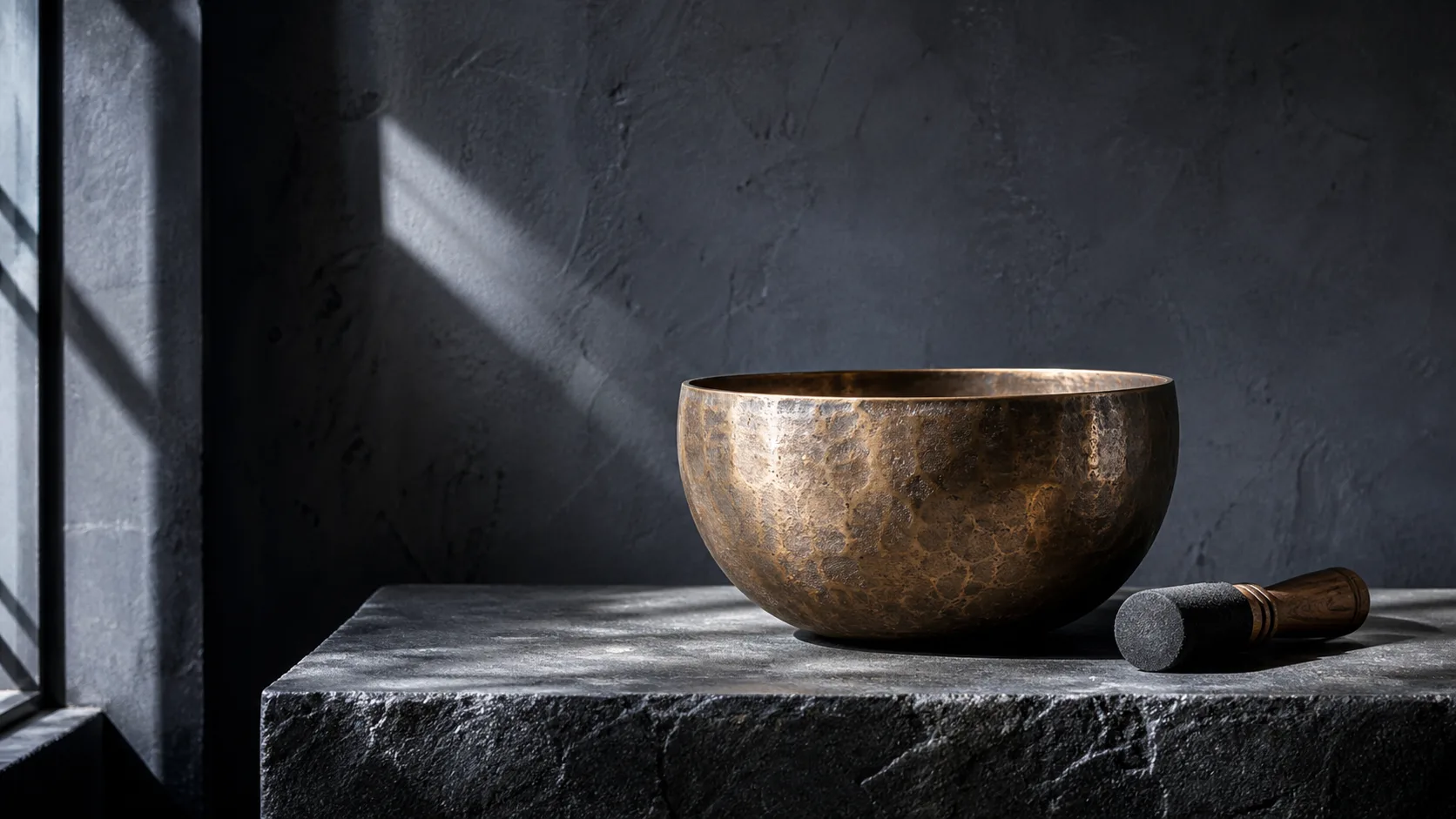
Follow This Order to Find the Right Bowl
The 432 Hz vs 440 Hz question appears everywhere in singing bowl shopping. It is a real buyer question, but it is often answered too simply. A singing bowl is not a pure sine wave. It creates a main tone, overtones, strike texture, resonance decay and room reflection. The number on the listing does not tell you how the bowl will feel after repeated use.
432 Hz usually refers to a tuning system where A is tuned to 432 Hz instead of the more common A=440 Hz. This shifts the pitch system slightly lower. Some listeners describe 432 Hz as warmer or softer. Others prefer 440 Hz because it lines up more easily with common musical instruments. Both preferences can be valid.
The problem begins when a tuning label becomes a promise. A 432 Hz sticker does not prove that a bowl has a clear main tone, balanced overtones or a comfortable decay. It also does not prove that the bowl will work well in your room.
Start with the main tone. Can you hear a clear center? Does the tone remain stable when the bowl is played more than once? If the sound center is unclear, the tuning label will not fix it.
Then listen to the overtones. A good singing bowl does not need the loudest or most dramatic overtone field. It needs a balanced sound that can be used repeatedly without fatigue. Harsh overtones may feel impressive in a short demo and become difficult in a studio or home practice.
Next, listen to resonance decay. A long sustain is not automatically better. The decay should feel controlled and natural. It should not collapse suddenly or trail into noisy vibration.
Room fit matters. A bowl that sounds beautiful in a product video may be too sharp, too loud or too long in a small room. A studio, retreat room, private home and hotel wellness room each need different volume and resonance behavior.
KONGTONG LIVING recommends this order: listen first, compare the main tone, check overtones and decay, test playing control, then consider tuning labels. Frequency can be part of the conversation, but stable sound should lead the decision.
Does This Singing Bowl Actually Fit You?
Choose by use case and stable sound before size, set size, budget and accessories.
| Your Question | What to Notice | KONGTONG LIVING View | What to Do Next |
|---|---|---|---|
| Use case | Is the bowl for home, teaching, space, collection or a brand event? | Use case comes before size or frequency labels. | Write the use case into the inquiry. |
| Stable sound | Is the tone clear, controlled, non-harsh and comfortable after repeated listening? | Stable tone and long-term listenability are core for a first bowl. | Listen for tone and decay. |
| Budget allocation | Does the budget ignore accessories, training and maintenance? | Buy the right instrument before expanding the set. | Choose one-bowl or set path. |
| Room fit | Do volume, decay and room materials work together? | Room sound standards decide long-term use. | Start product guidance. |
FAQ
Is 432 Hz better than 440 Hz for singing bowls?
Not automatically. 432 Hz is a tuning reference. Sound quality still depends on tone clarity, overtones, resonance decay, playability and room fit.
Why do many crystal singing bowl sets advertise 432 Hz?
It is a recognizable wellness-market label and many buyers search for it. It can describe the tuning system, but it should not replace listening tests.
Should I choose 440 Hz if I play with other instruments?
Often yes. 440 Hz is easier to match with many common instruments and recordings. The final choice still depends on the actual bowl and use case.
Can a phone app verify my singing bowl frequency?
It can give a rough reference, but singing bowls produce overtones and complex resonance. Apps may capture different frequency peaks depending on distance, volume and room noise.
Glossary
- 432 Hz
- a tuning reference where A is set to 432 Hz.
- 440 Hz
- a common modern tuning reference where A is set to 440 Hz.
- Main tone
- the clearest central pitch or sound identity of a bowl.
- Overtones
- additional frequencies heard above and around the main tone.
- Long-term listenability
- the ability of a sound to remain comfortable and useful across repeated sessions.
References and Method Boundaries
These references separate classical theory, modern acoustic or room research and claims governance. The classical five-tone framework is not modern clinical evidence, and KONGTONG LIVING's sound grading is a proprietary instrument standard rather than a medical or clinical classification.
- The Tibetan singing bowl: acoustics and fluid dynamicsA physical-acoustics reference on vibrational modes and sound generation, not evidence of health outcomes.
- Huangdi Neijing SuwenA primary classical source for historical Chinese medical sound and five-tone correspondences. It does not establish a TCM origin for singing bowls or clinical evidence that singing bowls treat insomnia, anxiety or other conditions.
- FDA General Wellness: Policy for Low Risk DevicesUsed to distinguish general-wellness language such as relaxation and everyday stress management from disease diagnosis or treatment claims.
- FTC Health Products Compliance GuidanceObjective health-related claims must be truthful, non-misleading and substantiated; KONGTONG LIVING therefore avoids diagnosis, treatment and outcome promises.
- ASA/CAP Health: Therapies (General)UK advertising guidance requiring objective efficacy claims for health therapies to be supported by appropriate evidence; this supports the distinction between subjective wellness use and treatment claims.
Why KONGTONG LIVING Listens Before Comparing Size and Labels
KONGTONG LIVING believes frequency labels should support listening, not replace it. A serious singing bowl should be selected through stable sound, clear tone, controlled resonance and real room use.
How to Use a Singing Bowl Responsibly
This article is for instrument, buying and lifestyle reference only. It does not provide health advice, medical guidance, outcome promises or specific results. For serious personal concerns, consult a qualified professional.
Share With Someone Choosing a Singing Bowl
Share this with someone choosing a bowl: define the use, room and budget, then compare matched full recordings for stable sound and long-term listenability.
Before Product Guidance
Prepare these details so KONGTONG LIVING can route you toward a first bowl, advanced practice bowl, teaching setup or room-ready set.
- Main use: home, teaching, studio, hospitality, tea space or collection
- Preferred sound character: lower, brighter, stable, long decay or more restrained
- Whether you already own bowls or accessories
- Use case
- Budget range
- City or room context
- Expected timing for purchase, training or partnership
Tell Us Your Use, Budget and Location
Ask KONGTONG LIVING for bowl selection guidance
Review Bowl Selection and Inquiry Details