
Best singing bowl training
What Is the Best Singing Bowl Training? Check Teaching, Practice and Feedback
Compare singing bowl training with 10 questions about current course details, actual teachers, stable playing, personal feedback, assessment, scope, costs and support.
Quick Answer
Define one 90-day outcome, then use the same ten questions to compare the current program, actual instructors, personal practice, assessment, scope, certificate, total commitment and aftercare. Course value should be visible in curriculum, teacher demonstration and feedback, supervised practice, assessment, consent, opt-out choices, referral boundaries and post-course support. A certificate title or advertised hours cannot substitute for independent delivery readiness. KONGTONG LIVING places this decision inside TCM singing bowl healing: a contemporary, non-clinical Traditional Chinese Medicine-informed singing bowl practice for relaxation, mindful listening, everyday stress management and calming wind-down rituals. Its method draws on Traditional Chinese Medicine sound philosophy and the five-tone framework; that basis is not clinical evidence or a diagnosis, treatment or outcome guarantee for anxiety disorders, insomnia or another condition.
BRAND METHOD
How TCM-Informed Listening Shapes Training
KONGTONG LIVING defines “TCM singing bowl healing” as a contemporary, non-clinical Traditional Chinese Medicine-informed singing bowl practice. It is methodologically informed by Traditional Chinese Medicine sound philosophy and the five-tone framework, then tested through stable sound, room response and long-term listenability.
It is for relaxation, mindful listening, everyday stress management and calming wind-down rituals; it does not diagnose or treat anxiety disorders, insomnia or other conditions, and the framework is not clinical efficacy evidence.
THE DECISION THIS PAGE SUPPORTS
Which Program Fits What You Need to Learn Now?
Define one capability you expect to use within 90 days, then ask the same ten questions about the current program, actual instructors, stable playing, personal correction, full sequences, assessment, scope, certificate, total commitment and aftercare. Move to observation or a detailed conversation only when the answers fit the goal.
Send one copy to anyone choosing with you and the same version to two or three providers. Answers become comparable only when they refer to the same learning goal.
PRACTICAL SELECTION ADVICE
Compare Two or Three Programs With the Same Questions
Start with your 90-day outcome, then compare the current instructors, personal playing and correction, full-sequence practice, assessment, certificate, total commitment and aftercare.
- Confirm the current program version and the people actually teaching
- Split total hours into personal playing, individual correction and full runs
- Review assessment, additional practice, certificate meaning and scope separately
- Obtain the all-in cost, refund terms and defined aftercare before paying
What to ask before deciding: Request the current syllabus, instructor allocation, cohort size, per-learner practice plan, feedback or assessment example, certificate explanation, instrument requirements, written quote and refund terms.
What Happens After You Contact Us
- 01Share the use, budget, location or room, and current experience
- 02Use a one-to-one video or focused conversation to review current items and full sound, or clarify course and project details
- 03Confirm price, delivery, arrangements and open questions before you decide
Prepare four details before enquiring
- Learning goal, current experience and intended use after training
- Online, in-person or blended preference and available time
- Required supervised feedback, assessment and post-course support
- Total budget for tuition, instruments, travel and practice time

SAVEABLE COMPARISON
10-Question Singing Bowl Training Comparison
Define one outcome you want to use within the next 90 days, then ask two or three providers the same questions. Clear teaching, practice, correction and commercial terms tell you more than a polished credential title or atmospheric course page.
| Question Before Enrolling | A Useful Answer Explains | What You Can Ask to See | When Information Is Missing |
|---|---|---|---|
| 1. What Must Change in 90 Days | Whether the program is for personal practice, adding sound to an existing modality, leading a small group, producing an event or building a venue program, with different foundations for each path. | Learning outcomes, teaching sequence and an assignment that resembles your intended use. | Choose one primary outcome first. If one sales promise still claims to prepare everyone for everything, keep comparing. |
| 2. Program Version and Entry Fit | The current program name and version, dates, venue or platform, format, prerequisites, cohort size and any stage a beginner should not enter directly. | The live enrollment page, complete syllabus, timetable and written terms for the current intake. | Ask the provider to confirm the current version in writing; do not pay from an old poster or verbal summary. |
| 3. Who Actually Teaches Each Module | The instructors who will be present, the modules each person owns, experience relevant to those modules and who will listen to and correct your playing. | Current faculty list, module allocation, cohort plan and feedback route. | A founder's reputation does not replace the person teaching your class. Pause when names or responsibilities remain undecided. |
| 4. How Listening and Stable Playing Are Trained | How learners hear tone centre, overtones, decay, level and room reflection, then practise striking, circling and stopping with enough consistency to compare attempts. | A real teaching demonstration, practice instruction, feedback example or observation class. | If the answer relies on free experience or frequency labels without a way to hear and correct sound, ask to observe before enrolling. |
| 5. Learner-Level Practice and Correction | How many rounds each learner performs, who observes, how specific the correction becomes, how cohort size affects waiting time and how remote submissions are reviewed. | Per-learner practice plan, teacher-to-learner ratio, feedback sample and assignment-return process. | Separate demonstrations and group exercises from personal correction. Do not let a large advertised hour count answer this question. |
| 6. Full-Sequence and Real-Room Practice | Whether learners practise arrival, development, silence, transition, closure and review, then adjust level, distance, decay, instrument position and participant choice in a real room. | Full-run practice schedule, room assignment, sequence example and teacher debrief method. | If the program teaches isolated techniques only, ask whether that actually serves the use you named in question one. |
| 7. Assessment, Additional Practice and Reassessment | What is assessed, who assesses it, what the learner submits, what happens when a skill needs more work and when it can be reviewed again. | Assessment criteria, anonymized feedback example and the additional-practice and reassessment policy. | When attendance or payment automatically equals completion, do not treat the certificate as evidence of usable capability. |
| 8. Consent, Level, Stopping and Scope | How participants are briefed and offered choice, how level is reduced, how someone moves, pauses or leaves, how touch is handled and where general-wellness sound practice stops. | participant information, stop process, scope language and a scenario exercise. | A course that teaches only the ideal flow, without stopping and scope, is not complete preparation for facilitation. |
| 9. What the Certificate Actually Records | The issuing entity, program version, completion conditions, whether individual assessment is included, how the record can be verified and which qualifications it does not represent. | Certificate sample, issue and verification notes, completion requirements and assessment record. | Decide whether your real use requires this certificate, then verify provenance and recognition separately. |
| 10. Total Cost, Instruments, Refunds and Aftercare | What tuition includes and excludes, instruments or materials to buy, assessment or repeat-work fees, travel and time, cancellation and refund terms, and who supports learners for how long. | A dated written quote with currency, instrument list, refund terms and defined aftercare. | Put the full commitment in one budget. Do not pay a non-refundable amount while material costs or exit terms remain unclear. |
Send the same table to two or three providers. Record written answers and viewable material before deciding whether to observe, continue the conversation or pause payment. A blank is not a low score; it is a fact to clarify. Use the separate training-cost guide for a full commitment comparison.
Who Should Use This Course Comparison
- First-time students who want more than teacher fame, retreat imagery or a certificate title
- Prospective students comparing two or three programs and looking for one consistent set of questions
- Singing bowl owners who need better listening, stable playing, full-sequence or real-room capability
- Yoga, wellness, hospitality and venue practitioners adding sound while keeping a clear non-clinical scope
Five Points to Keep Before Enrolling
- There is no context-free best course. Define what you want to use within 90 days before comparing providers.
- Judge the current instructors, teaching sequence and learner-level correction, not the advertised total hours alone.
- Listening, repeatable onset, sustained tone, deliberate stopping, sequence and room judgement should be taught progressively and reviewed specifically.
- Assessment, certificate and practical readiness are separate questions. A completion record does not create universal facilitation or medical authority.
- Count instruments, materials, additional practice, travel, time, refunds and aftercare in the commitment, and obtain current written terms before paying.
How to Compare Two or Three Singing Bowl Programs
Start with one capability you expect to use
Personal ritual, adding bowls to an existing class, leading a small group and operating a venue program are not interchangeable outcomes. Choose the first task you will actually repeat, then note your current experience, instrument access, practice room and weekly time. This keeps a provider's positioning from choosing the goal for you.
Read the syllabus as a learning sequence
A long list of instruments, traditions or frequency concepts does not show how learning happens. Look for a progression from listening and basic control into sound roles, a complete sequence, room response and participant care. At every stage, ask what the learner performs, how often it is practised and who reviews it.
Identify the people who will hear you play
The founder on the sales page may not teach your intake. Ask who owns each module, who observes your striking and circling, who gives correction and how cohort size changes access to that person. Experience is useful when it relates to the module being taught and can be connected to the feedback you receive.
Inspect how listening and stable playing are taught
A demonstration should lead into repetition, comparison and correction. Learners need to hear tone centre, overtones, decay, unwanted noise and room response, then adjust force, angle, speed and stopping under reasonably consistent conditions. KONGTONG LIVING organises this through You Sheng, Zheng Yin, Ding Yin and Na Yin: sound begins reliably, becomes clear and controllable, then returns to attentive listening across person, instrument and room.
Count personal correction, not just class hours
Hands-on can still mean watching or taking a brief turn in a large group. Ask how many rounds each learner performs, how many are observed, how specific the feedback becomes and whether everyone completes a continuous sequence. For remote training, the provider should explain what camera and audio can reveal and when an in-person or higher-quality review is needed.
Require a complete run in a real room
Producing sound from one bowl is not the same as facilitating a coherent experience. Training should address the participant information, choice, level and distance, development, silence, transitions, closure and review, then introduce room reflections, long decay, nearby zones and an unexpected stop. More instruments increase the need for sound-role and room judgement.
Use assessment to find the next practice task
Ask for the criteria, submission, assessor and feedback format before enrolling. Useful assessment identifies the attack, playing control, sequence choice or scope language that needs further work, then explains how it can be reviewed again. Payment, attendance and course completion do not replace that learning loop.
Keep certificate utility separate from course quality
A certificate can record the provider, program version, learning period and assessment conditions. Its value still depends on who will inspect it, for which decision and whether the record can be verified. First decide whether the program develops the capabilities you need; use the separate certificate guide to investigate issue, assessment and recognition.
Calculate the commitment before paying
Add instruments, mallets and supports, materials, assessment or repeat work, travel, accommodation, practice time and defined aftercare to tuition. Request a dated quote with currency and review cancellation, refund and program-change terms. A higher price does not guarantee personal feedback, while a lower price may move essential costs outside the headline.
Make the enrollment decision from one completed comparison
Place two or three providers in the same ten-question table. Clear answers, a matching goal and viewable teaching material justify an observation class or detailed conversation. Missing material calls for written clarification. A mismatch in the goal, actual instructors, personal correction or scope is a reason to continue comparing rather than react to enrollment pressure.
What to Obtain Before Enrolling
- Current syllabus, version, dates, venue or platform, format, prerequisites and cohort size
- The instructors teaching this intake, their module ownership and who provides personal sound feedback
- Per-learner playing rounds, full-run practice, teacher-to-learner ratio and assignment-return method
- Assessment criteria, feedback example and additional-practice and reassessment terms
- participant information, level and stop process, touch policy and general-wellness scope
- Certificate sample, issuing entity, completion conditions, verification route and stated limits
- Dated all-in quote, instrument requirements, cancellation and refund terms and defined aftercare
DOCUMENTED PRACTICE
Professional ability grows through observable, correctable practice
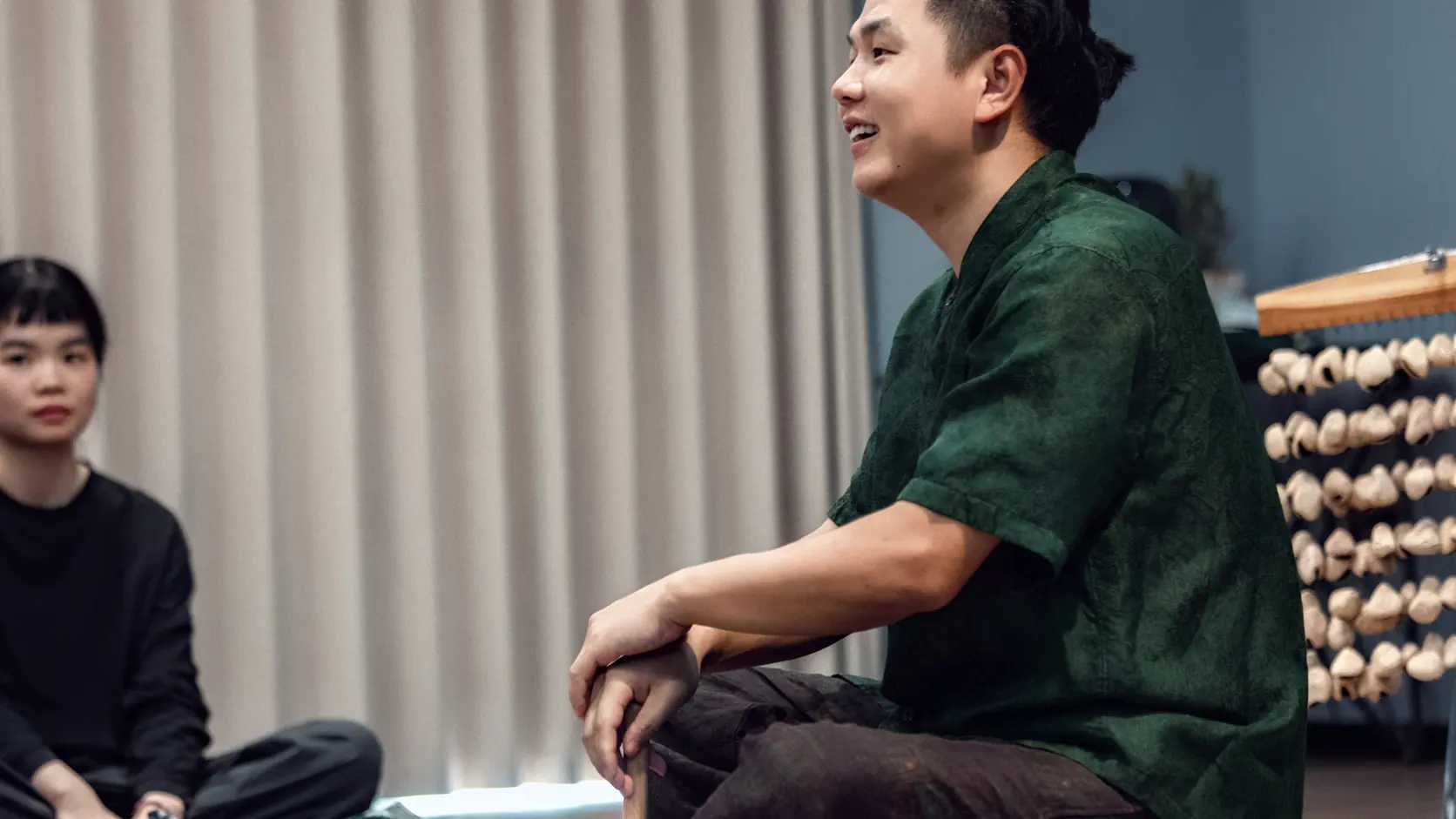
Holding distance, bowl direction, body position and mallet contact all change the sound. Useful training lets a teacher see these details and correct them in practice.
A photograph can show the setup; progress still depends on repeated practice, specific feedback and review.


Video Guide
See the Method in 38 Seconds
A useful singing bowl course is not proven by a certificate photo. Check individual practice time, teacher correction, room-level work, consent and opt-out skills, and whether completion depends on observable competence.
Watch Video and TranscriptShare These Ten Questions With Someone Choosing a Course
Share this with someone comparing courses: check supervised practice, individual feedback, assessment, professional boundaries and total commitment before the certificate title.
The KONGTONG LIVING Sound-Learning Standard
Every recommendation returns to stable sound, clear tone, controlled resonance, room fit and long-term listenability. Products, training and space programs must be hearable, explainable and repeatable.
Four Reasons to Pause Before Paying
Use the ten questions for the full comparison. Any one of these gaps deserves clarification before urgency, reputation or a certificate title closes the enrollment decision.
| Your Question | What to Notice | KONGTONG LIVING View | What to Do Next |
|---|---|---|---|
| The current program and teachers are undefined | The enrollment page, syllabus, dates, cohort and actual instructors cannot be reconciled for this intake. | You are buying the current delivery, not the brand history or an old poster. | Obtain current written details before deciding. |
| Personal practice and correction cannot be counted | Only total hours, demonstrations or group exercises are named, without who hears each learner or how often they play. | Sound capability develops through actual performance and specific feedback. | Observe a class and request the per-learner practice plan. |
| Assessment, certificate and capability are merged | Attendance or payment produces the certificate without individual assessment, additional practice or another review. | A certificate may record learning; it cannot replace stable playing and full-sequence capability. | Check assessment conditions and certificate use first. |
| Total commitment and exit terms are incomplete | Instruments, materials, repeat work, travel, refunds or aftercare appear only after payment. | The full commitment and exit route should be visible before a non-refundable payment. | Request a written quote and terms, then pause until complete. |
Continue With Cost, Format, Certificate and Risk Guides
FAQ
What is the best singing bowl training?
There is no context-free winner. Define the task you want to use within 90 days, then compare the current program, actual instructors, learner-level practice, assessment, scope, certificate, cost and support. A program that answers clearly and fits that task is worth observing or discussing in detail.
Can a complete beginner take singing bowl training?
Yes, when the entry route begins with listening, repeatable onset, circling, force and stopping before moving into combinations and full sequences. An advanced title should not be used to skip foundational correction.
How many days or hours should singing bowl training take?
Duration alone does not establish quality. Separate demonstration, personal playing, individual correction, full-run practice, assessment and practice between classes, then ask how much feedback each learner actually receives.
Is online or in-person singing bowl training better?
Concepts, review and some camera-visible techniques can work online. Fine sound, force, body position and room response may need stronger audio or in-person feedback. Choose online, in person or blended according to the capability you need, not convenience alone.
Is a singing bowl training certificate useful?
First name who will inspect it and for what decision. Verify the issuing entity, program version, completion and assessment conditions, verification route and recognition. It can record learning, but it does not replace practical sound capability or another professional qualification.
Do I need to buy my own bowls before enrolling?
Policies vary. Ask what is supplied in class, what is needed for regular practice, whether a required purchase is justified and how pricing and returns work. Early on, reliable access to a feedback-ready instrument matters more than buying a large set.
Can I facilitate paid sessions immediately after completion?
Completion alone cannot answer that. Review your individual assessment, repeatable sound control, complete-sequence practice, real-room judgement, participant choices and stopping process, then operate within your capability and applicable local requirements.
Glossary
- Learning Outcome
- One concrete task the learner expects to perform reliably in a real setting after the program.
- Stable Playing
- Repeatable and controllable onset, sustained tone, level and stopping under reasonably similar conditions.
- Learner-Level Feedback
- Specific observation and next adjustment based on one learner's actual sound and technique.
- Complete Sequence
- A continuous practice from participant informationing and entry through development, silence, transition, closure and review.
- Reassessment
- A further review against clear criteria after the learner completes specified additional practice.
- Course Fit
- The match between outcomes, entry level, delivery format, feedback density, commitment and intended use.
- You Sheng, Zheng Yin, Ding Yin and Na Yin
- KONGTONG LIVING's four-layer learning standard: sound begins reliably, becomes clear, remains controllable and returns to attentive listening across person, instrument and room.
References and Method Boundaries
These references separate classical theory, modern acoustic or room research and claims governance. The classical five-tone framework is not modern clinical evidence, and KONGTONG LIVING's sound grading is a proprietary instrument standard rather than a medical or clinical classification.
- ISO 29993:2017 - Learning services outside formal educationISO's official page describes service requirements for learning outside formal education and the value of clear information about the provider and expected learning. It is a reference model here, not a claim that KONGTONG LIVING or any reviewed course is certified or conforms to the standard.
- FTC - Choosing a Vocational School or Certificate ProgramFTC US consumer guidance recommends checking program delivery, instructors, equipment, class conditions, total cost, written terms and outcome promises before enrollment. This page uses the questioning discipline without treating singing bowl training as regulated vocational education or giving legal advice.
- The Tibetan singing bowl: acoustics and fluid dynamicsA physical-acoustics reference on vibrational modes and sound generation, not evidence of health outcomes.
- Huangdi Neijing SuwenA primary classical source for historical Chinese medical sound and five-tone correspondences. It does not establish a TCM origin for singing bowls or clinical evidence that singing bowls treat insomnia, anxiety or other conditions.
- FDA General Wellness: Policy for Low Risk DevicesUsed to distinguish general-wellness language such as relaxation and everyday stress management from disease diagnosis or treatment claims.
- FTC Health Products Compliance GuidanceObjective health-related claims must be truthful, non-misleading and substantiated; KONGTONG LIVING therefore avoids diagnosis, treatment and outcome promises.
- ASA/CAP Health: Therapies (General)UK advertising guidance requiring objective efficacy claims for health therapies to be supported by appropriate evidence; this supports the distinction between subjective wellness use and treatment claims.
How KONGTONG LIVING Defines Serious Training
KONGTONG LIVING does not treat training as an identity upgrade. It should build sound capability that remains usable: hearing clearly, playing consistently, stopping deliberately, leaving space and adapting to the real room and participants. Our TCM singing bowl healing category is a contemporary, non-clinical Traditional Chinese Medicine-informed singing bowl practice, organised through five-tone philosophy, You Sheng, Zheng Yin, Ding Yin, Na Yin, stable sound and long-term listenability. It supports relaxation, mindful listening, everyday stress management and calming wind-down rituals. Traditional frameworks, certificates and personal experience are not expanded into medical competence.
Training and Sound-Practice Scope
This page is for instrument, training, space-experience and lifestyle reference only. It does not provide medical guidance, health advice or outcome promises.
Before Training Inquiry
Prepare your goal and background so KONGTONG LIVING can recommend listening practice, technique training, session structure or space-service training.
- Goal: personal practice, teaching support, commercial sessions, space service or brand project
- Background: yoga, meditation, music, space operation or beginner
- Current instruments and practice frequency
- Use case
- Budget range
- City or room context
- Expected timing for purchase, training or partnership
Check Whether KONGTONG LIVING Training Fits Your Goal
No audition video or long application is needed. Share what you want to learn, where you will use singing bowls and what experience you have now; a human advisor will discuss the course direction and current arrangements with you one to one.
See the Ten Questions to Prepare