
KONGTONG LIVING Knowledge
Online or In-Person Singing Bowl Training? Choose by Feedback and Practice
Compare online, in-person and blended singing bowl training by theory, listening, technique, room practice, feedback, assessment and total commitment.

Quick Answer
Combine formats around listening background, available instruments, teacher feedback, practical assessment and time cost rather than treating the choice as binary. Course value should be visible in curriculum, teacher demonstration and feedback, supervised practice, assessment, consent, opt-out choices, referral boundaries and post-course support. A certificate title or advertised hours cannot substitute for independent delivery readiness. KONGTONG LIVING places this decision inside TCM singing bowl healing: a contemporary, non-clinical Traditional Chinese Medicine-informed singing bowl practice for relaxation, mindful listening, everyday stress management and calming wind-down rituals. Its method draws on Traditional Chinese Medicine sound philosophy and the five-tone framework; that basis is not clinical evidence or a diagnosis, treatment or outcome guarantee for anxiety disorders, insomnia or another condition.
BRAND METHOD
How TCM-Informed Listening Shapes Training
KONGTONG LIVING defines “TCM singing bowl healing” as a contemporary, non-clinical Traditional Chinese Medicine-informed singing bowl practice. It is methodologically informed by Traditional Chinese Medicine sound philosophy and the five-tone framework, then tested through stable sound, room response and long-term listenability.
It is for relaxation, mindful listening, everyday stress management and calming wind-down rituals; it does not diagnose or treat anxiety disorders, insomnia or other conditions, and the framework is not clinical efficacy evidence.
What Do You Need to Learn Before Choosing a Course?
For first-time students comparing course formats, remote learners who need to know when travel is worthwhile, and practitioners preparing to facilitate groups, studios or hospitality settings. This page selects an overall delivery mix. The separate remote-verifiability guide checks whether an individual skill can be evidenced online.
What to Ask Before You Enrol
Translate a course ambition into observable capabilities before choosing a format. Written reasoning can be reviewed online; continuous video can support selected technique correction; microphones and playback systems limit acoustic judgement; real-room and group facilitation require situated evidence. Course value comes from submission, specific feedback, another attempt and a recorded decision, not from livestream hours or certificate wording alone.
PRACTICAL SELECTION ADVICE
Choose format by feedback needs, not convenience alone
Online learning supports paced review and distance access; in-person work makes immediate correction of grip, force, level and room interaction easier. A blended course should show how the two connect.
- List techniques that must be observed live
- Confirm how online assignments are recorded and corrected
- Compare cohort ratio, feedback delay and equipment access
- Count travel, time and repeated-practice cost
What to ask before deciding: Request an online lesson sample, feedback example, in-person practice plan, absence policy, equipment requirements and final assessment method.
What Happens After You Contact Us
- 01Share the use, budget, location or room, and current experience
- 02Use a one-to-one video or focused conversation to review current items and full sound, or clarify course and project details
- 03Confirm price, delivery, arrangements and open questions before you decide
Prepare four details before enquiring
- Learning goal, current experience and intended use after training
- Online, in-person or blended preference and available time
- Required supervised feedback, assessment and post-course support
- Total budget for tuition, instruments, travel and practice time

Can This Course Actually Teach What You Need?
Start with one real assignment for the next 90 days. Personal listening practice, instrument care, designing a quiet sequence, facilitating a small group and delivering in a hotel room are different jobs. Write who will use the skill, in what room, with which instruments and what repeatable result is required. Only then does delivery format become a useful question.
Separate the evidence into four channels. Knowledge needs an explanation or scenario decision. Technique needs uninterrupted observation and correction. Listening needs matched records of attack, tone centre, overtones and decay. Room practice needs actual distance, materials, movement and participant choices. A course-completion record cannot evidence all four.
Online delivery earns its place through replay, annotation and repeated submission. Ask to see a real assignment and a de-identified feedback example. Useful feedback identifies the observed behaviour, specifies the next change and asks for another attempt. A live webinar followed by general discussion is access to teaching, not proof that your playing has been assessed.
Acoustic judgement is the first hard boundary. Microphone position, automatic gain, noise suppression, compression, network transport, room reflections and the tutor's loudspeakers can all alter perception. The responsible response is not to dismiss remote audio. It is to document the chain, preserve the full attack and natural decay, repeat under matched conditions and reserve consequential judgements for a better capture or in-person review.
Video correction has its own acceptance rule. The primary view should continuously show the hand, bowl, mallet, contact point and relevant posture. A close angle may clarify contact but should not replace the sequence with edited fragments. The learner then repeats the same action after correction so both parties can see whether the change held.
Group and commercial-room outcomes require situated evidence. Listening distance, neighbouring zones, movement, guest information, freedom to opt out, live observation and stop control cannot be inferred from a tabletop demonstration. A remote provider may supervise a real-room assignment, but the course should name the observer, record retained and any outcome that still needs direct assessment.
In-person delivery also has to prove value. A crowded room with too few instruments, no individual playing time and no review may offer atmosphere without competence evidence. Confirm cohort size, individual practice allocation, access to exact instruments, full-flow rehearsal and what happens when a learner has not yet met a standard.
Blended should describe a handoff, not a bundle. One credible sequence uses online work for language, planning and first submissions; converts observed gaps into a focused in-person list; then requires a revised submission or supervised delivery. If the online and live components do not exchange evidence, adding their hours together does not create a feedback loop.
Compare the total commitment, not tuition alone. Include instrument access, mallets, recording equipment, travel, accommodation, time away from work, practice-room cost, assignment time and possible remediation. A low price without feedback may require later retraining. A high price without a transparent assessment record is not automatically professional.
Pause when a course promises practitioner status in a few days, treats a certificate title as the competence standard, hides its curriculum or feedback sample, or markets guaranteed relief for insomnia, anxiety or another health condition. Responsible training states its educational scope, evidence limits, referral boundary and transaction terms before payment.
KONGTONG LIVING uses TCM singing bowl healing as market language for a contemporary, non-clinical practice informed by Traditional Chinese Medicine sound philosophy and the five-tone framework. The framework can organise timing, movement, stillness and tonal relationships. Competence is still tested through stable sound, You Sheng, Zheng Yin, Ding Yin, Na Yin, room standards and long-term listenability, not a frequency label or medical outcome.
Finish with a one-page course-fit summary: intended task, current experience, location and travel window, exact instruments available, weekly practice time, capabilities that need live observation, budget ceiling and evidence expected from feedback. Send the same questions to each provider. Comparable answers reveal more than different course brochures.
DOCUMENTED PRACTICE
Professional ability grows through observable, correctable practice
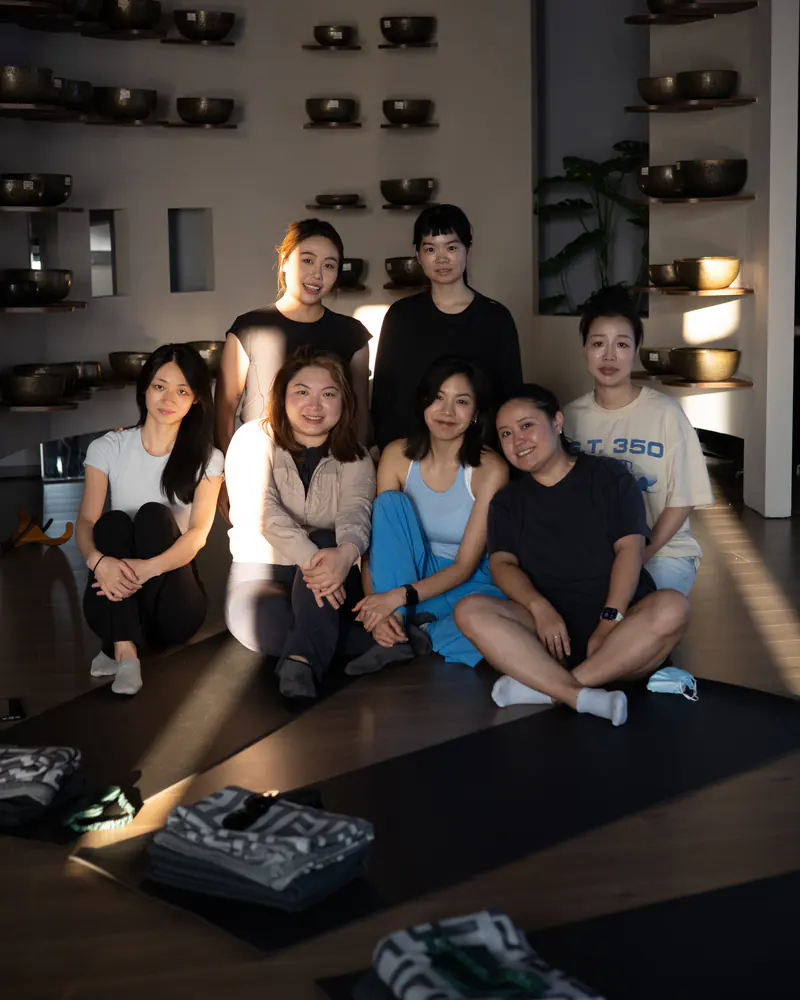
In-person learning matters because people can listen together, practise together and see the relationship between movement and sound in the room.
Confirm the current teacher, group size, hours, assessment, certificate terms and fees in the formal course information before enrolling.

SAVEABLE COMPARISON
Singing Bowl Training Format Comparison
Place each promised capability against the evidence it needs, the likely gap and the delivery mix most able to close that gap.
| Capability | Evidence to Request | Main Distortion or Gap | Best Fit (Online / In Person / Blended) |
|---|---|---|---|
| Concepts and Terminology | Explain instruments, sound structure and scope boundaries; revise a marked scenario decision | Watching or attendance without assessed work | Online can lead when tutor review is included |
| Instrument Familiarity and Care | Identify an exact instrument, mallet, support, stopping, care and storage routine | The tutor demonstrates equipment the learner cannot practise with | Online demonstration plus an exact-item task; verify in person if needed |
| Camera-Observable Technique | One continuous view of hand, bowl, mallet, contact point and relevant posture, followed by a corrected attempt | Edited success clips hide attack, friction loss and adjustment | Online for foundations; blended for fine correction |
| Listening Through an Audio Chain | Matched records of attack, tone centre, overtones, decay, repeatability, device and room | Automatic gain, suppression, compression, speakers and room reflections change perception | Blended preferred; confirm material judgements in person |
| Force, Angle and Contact Correction | The tutor names the observed behaviour, next change and retest condition | Atmospheric feedback gives no executable correction | In person preferred; remote needs live multi-angle review |
| Real-Room and Group Facilitation | Demonstrate level, distance, movement, participant information, opt-out and closing in the intended room | A desktop exercise cannot evidence situated delivery | In person or a supervised real-room assignment |
| Supervised Feedback | Named reviewer, response window, marked example and resubmission route for every critical outcome | Large cohorts offer general Q&A without individual observation | Any format, but the feedback contract must be explicit |
| Assessment and Remediation | Published rubric, evidence threshold, failed-outcome action and reassessment record | Completion or attendance automatically produces a certificate | Online / In Person / Blended all require it |
Define the capability evidence you need before choosing online, in-person or blended delivery. If a provider cannot name the evidence, reviewer and remediation route, do not let price or certificate language make the decision.
Can This Course Teach What You Need?
Training value comes from trainable skills: listening, technique, session structure, room judgment, ethical language and review.
| Your Question | What to Notice | KONGTONG LIVING View | What to Do Next |
|---|---|---|---|
| Listening practice | Does it train tone, overtones, decay, harshness, looseness and room reflection? | Hear sound clearly before leading others. | Start training inquiry. |
| Technique control | Does it practice striking, circling, pausing, distance and force? | Stable playing is the base of professional presence. | Clarify learning goals. |
| Session structure | Does it include opening, development, silence, closing and review? | A sound experience needs structure, not random playing. | Match the training path. |
| Ethical language | Does it avoid medicalized and outcome-promise language? | Clear boundaries protect users and the brand. | Read professional boundaries. |
FAQ
Can a complete beginner start with online singing bowl training?
Yes, when the course includes individual submissions, specific correction and another attempt. Reserve in-person or supervised real-room work for outcomes involving fine listening, tactile correction, group facilitation or commercial delivery.
Does remote audio make sound assessment impossible?
No. It can support limited structural and repeatability observations when the device, distance, room and processing are documented. Material judgements about timbre, level and room behaviour may still need matched recapture or in-person confirmation.
Is in-person training always better?
No. Its advantage exists only when learners receive enough instrument access, individual practice, observed correction and reassessment. Physical attendance by itself is not competence evidence.
What makes a blended course genuinely integrated?
Online submissions should create the live correction plan, and live performance should feed a later reassessment. Each stage needs an owner, evidence record and decision.
Do I need to own a bowl before enrolling?
That depends on the assignments. Confirm who supplies practice instruments, whether one exact instrument must be used across submissions, and whether equipment cost is included in the quoted learning commitment.
Does a course certificate prove I can facilitate independently?
Not by itself. Review the assessed capabilities, evidence threshold, supervised practice, scope boundaries and remediation record. Attendance and independent-delivery readiness are different claims.
Glossary
- Capability evidence
- A reviewable learning result such as marked work, uninterrupted technique video, matched sound records or supervised room delivery.
- Audio chain
- The microphone, device processing, network transport and playback system between the instrument and the reviewer.
- Feedback loop
- Submission, specific correction, another attempt, reassessment and a recorded outcome.
- Situated task
- Practice completed in the intended room, distance and operating conditions rather than only at a desk.
- Total commitment
- Tuition plus instruments, equipment, travel, time, practice space and necessary remediation.
- course-fit summary
- A one-page record of the learner's task, baseline, constraints, budget and required evidence.
References and Method Boundaries
These references separate classical theory, modern acoustic or room research and claims governance. The classical five-tone framework is not modern clinical evidence, and KONGTONG LIVING's sound grading is a proprietary instrument standard rather than a medical or clinical classification.
- The subjective relevance of perceived sound aspects in remote singing educationA 2022 original study in the Journal of the Acoustical Society of America comparing perceived temporal, sound and room qualities across remote singing-education settings. It supports documenting the audio chain and environment; it does not establish singing bowl training effectiveness.
- Creating Space for Reflection: Meaning-Making Feedback in Instrumental/Vocal LessonsOriginal research on feedback interactions in one-to-one instrumental and vocal lessons, used to support observable demonstration, embodied action, reflection and another performance within a feedback process. Its setting and sample limits remain material.
- The Tibetan singing bowl: acoustics and fluid dynamicsA physical-acoustics reference on vibrational modes and sound generation, not evidence of health outcomes.
- Huangdi Neijing SuwenA primary classical source for historical Chinese medical sound and five-tone correspondences. It does not establish a TCM origin for singing bowls or clinical evidence that singing bowls treat insomnia, anxiety or other conditions.
- FDA General Wellness: Policy for Low Risk DevicesUsed to distinguish general-wellness language such as relaxation and everyday stress management from disease diagnosis or treatment claims.
- FTC Health Products Compliance GuidanceObjective health-related claims must be truthful, non-misleading and substantiated; KONGTONG LIVING therefore avoids diagnosis, treatment and outcome promises.
- ASA/CAP Health: Therapies (General)UK advertising guidance requiring objective efficacy claims for health therapies to be supported by appropriate evidence; this supports the distinction between subjective wellness use and treatment claims.
How KONGTONG LIVING Judges Whether a Course Can Teach Well
KONGTONG LIVING does not use online, in-person or certificate wording as a proxy for quality. We ask whether an outcome can be heard, observed, corrected and reassessed, then judge practice through stable sound, You Sheng, Zheng Yin, Ding Yin, Na Yin, room-aware control and long-term listenability. Traditional Chinese Medicine sound philosophy and the five-tone framework inform the method; they do not replace acoustics, scope boundaries or competence evidence.
What Singing Bowl Training Can and Cannot Prepare You For
This page provides general education and course-comparison information, not medical, psychological, legal, employment, licensing or certification advice. TCM singing bowl healing refers here to a contemporary, non-clinical practice informed by Traditional Chinese Medicine sound philosophy and the five-tone framework. It does not claim that bowls were ancient TCM treatment devices, and it does not present anxiety disorders, insomnia or another condition as training outcomes. The cited remote singing and instrumental teaching studies are used only to frame audio-chain and feedback-observation questions, not to prove singing bowl course effectiveness.
Share With Someone Choosing a Singing Bowl Course
Share this with someone comparing courses: check supervised practice, individual feedback, assessment, professional boundaries and total commitment before the certificate title.
Before Training Inquiry
Prepare your goal and background so KONGTONG LIVING can recommend listening practice, technique training, session structure or space-service training.
- Goal: personal practice, teaching support, commercial sessions, space service or brand project
- Background: yoga, meditation, music, space operation or beginner
- Current instruments and practice frequency
- Use case
- Budget range
- City or room context
- Expected timing for purchase, training or partnership
Tell Us What You Need to Learn
Share your intended use, location, experience, exact instruments, weekly practice time and target setting with KONGTONG LIVING. We will identify which capabilities can be developed online, which need live evidence and what to ask before enrolling.
Review Course Fit and Inquiry Details