
KONGTONG LIVING Knowledge
How Much Does a Sound Healing Space Cost? Count These Twelve Costs
How much does a sound healing space cost? Budget survey, acoustics, exact instruments, staff, one ordinary month, contingency and a stoppable pilot.
Quick Answer
Fix one real room and one bookable service, separate startup, monthly fixed, session-variable, internal, contingency and exit costs, then use an actual pilot to test break-even sessions against real capacity. Start with the real room, guest profile and operating model. Use a small pilot to understand sound, movement and staff coordination before adding instruments or construction spend. KONGTONG LIVING places this decision inside TCM singing bowl healing: a contemporary, non-clinical Traditional Chinese Medicine-informed singing bowl practice for relaxation, mindful listening, everyday stress management and calming wind-down rituals. Its method draws on Traditional Chinese Medicine sound philosophy and the five-tone framework; that basis is not clinical evidence or a diagnosis, treatment or outcome guarantee for anxiety disorders, insomnia or another condition.
BRAND METHOD
How TCM-Informed Listening Guides Sound-Space Design
KONGTONG LIVING defines “TCM singing bowl healing” as a contemporary, non-clinical Traditional Chinese Medicine-informed singing bowl practice. It is methodologically informed by Traditional Chinese Medicine sound philosophy and the five-tone framework, then tested through stable sound, room response and long-term listenability.
It is for relaxation, mindful listening, everyday stress management and calming wind-down rituals; it does not diagnose or treat anxiety disorders, insomnia or other conditions, and the framework is not clinical efficacy evidence.
What Kind of Room Are You Adding Sound Healing To?
For hotel, spa, retreat, boutique-stay, yoga, tea-space and wellness operators who can identify a city, one room, one proposed bookable service and one to three current quotes. It also supports a working meeting across ownership, finance, operations, design, facilities and procurement. A mood board, instrument list or general wish to create a healing room is not yet enough for a reliable per-square-metre estimate; define the venue and service details first.
Start With the Guest and the Room, Then Choose Instruments
Budget one bookable service rather than asking the wider venue to subsidise an untested idea on paper. Keep startup cash, monthly fixed operating cost, variable session cost, internal time and exit exposure separate. Let measured room problems determine acoustic work, and bind instrument cost to current identifiable options and complete audio. Unknown remains unknown; forecast revenue does not offset commitment. Expand only when a small pilot repeats under ordinary staffing, actual pricing and conservative attendance assumptions.
PRACTICAL SELECTION ADVICE
Budget through one ordinary operating month before expanding the fit-out
Fix one real room and one bookable service, then reconcile startup, monthly fixed, session-variable, internal, maintenance, contingency and exit costs in one reviewable budget.
- Fix the city, room, one bookable service and quote date
- Separate startup, monthly fixed and variable session costs
- Include exact instruments, staff capability, maintenance, internal time and exit
- Use a stoppable pilot to test session contribution against real monthly capacity
What to ask before deciding: Ask for an amount, basis, payment timing, owner and unresolved point on every line, plus collected session revenue, variable session cost, monthly fixed cost, pilot capacity and exit conditions.
What Happens After You Contact Us
- 01Share the use, budget, location or room, and current experience
- 02Use a one-to-one video or focused conversation to review current items and full sound, or clarify course and project details
- 03Confirm price, delivery, arrangements and open questions before you decide
Prepare four details before enquiring
- Business objective, venue type, city and target launch date
- Room size, ceiling, surfaces, adjacent zones and noise constraints
- Guest profile, group size, session length and operating cadence
- Budget range for instruments, acoustics, training, maintenance and a complete pre-opening rehearsal
How to Make Sound Healing Work in a Real Room
The useful answer to sound healing space cost is not a global range. It is a dated budget attached to one city, exact room, service version and delivery market. Two rooms of equal floor area can carry different adjacent noise, building services, operating windows, existing works, staff capacity and import exposure. Define the object before comparing a total.
Begin with one bookable unit: duration, paid capacity, room, setup window, required sound roles, accountable facilitator, participant choice and exit, and whether an ordinary shift can deliver it. Do not ask hotel-wide, resort-wide or studio-wide revenue to prove an untested service. Brand exposure and projected guest satisfaction are not collected cash.
Separate startup commitment from the ordinary operating month. Startup can include survey, design, soundscape and acoustic work, fit-out, exact instruments, storage and equipment, freight and duties, commissioning, initial staff development, prototype and acceptance. Monthly fixed costs include room allocation, core labour, insurance, software, maintenance and review. Variable session costs include facilitation, reset, laundry, consumables, payment fees, commissions and cancellation exposure.
Let the room create the acoustic scope. ISO 3382-2 describes procedures, apparatus, measurement positions, evaluation and reporting for reverberation time in ordinary rooms; it does not prescribe one target for this project or make every test mandatory. The buyer lesson is narrower: budget a baseline, prototype and retest where the site evidence calls for them, rather than treating decorative panels, rugs or a visual render as acoustic completion.
Bind instrument cost to current identifiable candidates. KONGTONG LIVING reviews item or line identity, dimensions and mass, mallet and support, complete restrained attack-to-natural-decay audio, repeatability, room response, control, protection, freight and replacement. Traditional Chinese Medicine sound philosophy and the five-tone framework organise movement, rhythm, tone colour, density and silence; You Sheng, Zheng Yin, Ding Yin, Na Yin and long-term listenability test use in the real room. Symbolic organ, colour, frequency or energy language does not price an instrument.
Staff capability is more than one training invoice. Include role ownership, learner-level practice, complete rehearsal, explanation and informed choice, level and stopping, pressure-free exit, incident escalation, cleaning, maintenance, cover and record handover. If the service works only when the founder or one visiting expert is present, reduce the offer before multiplying sessions.
Life-cycle cost is the stronger discipline. ISO 15686-5 covers relevant costs or cash flows from acquisition through operation to disposal within an agreed analysis period and scope. This page borrows that scope logic: worn implements, repair, replacement, refresher work, periodic retest, contract termination and reinstatement need visibility. It does not claim KONGTONG LIVING or a venue is certified to the standard.
Price internal capacity. Site review, approvals, procurement, contracting, works coordination, local fire and accessibility review, roster design, records and finance checks consume real hours even without an external invoice. Record an internal cost or a capacity ceiling. Keep building, acoustic, insurance, legal, tax and permit decisions with qualified professionals in the venue's jurisdiction.
Run a stoppable pilot before irreversible expansion. Use the real room, an ordinary shift, actual customer price, a workable explanation and exit route, and complete records for setup, paid attendance, costs, stable sound, feedback and failures. A highly produced launch event is not an operating baseline. Free attendance should not be converted directly into paid demand.
Calculate monthly capacity with one service unit. Session contribution equals collected session revenue minus variable session cost. Monthly break-even sessions equal monthly fixed operating cost divided by session contribution. If contribution is non-positive, redesign first. If required sessions exceed the available room, staff and saleable operating windows, stop using optimistic occupancy to close the gap. The U.S. Small Business Administration also frames break-even analysis as an estimate rather than a precise accounting or financing result.
Keep startup recovery separate from monthly break-even. Only after a pilot produces reviewable positive monthly surplus is there a basis for discussing how long startup commitment might take to absorb, with conservative, base and upper cases. Do not publish a payback month before actual bookings, attendance and full cost exist. Never support revenue with promised treatment of anxiety, insomnia or another condition, or with an unverified repeat-visit claim.
KONGTONG LIVING begins with a reviewable space budget plan. Share the city, plan or room dimensions, adjacent uses, proposed service, one to three current quotes, budget ceiling and target date. We will identify missing scope, a stoppable pilot, site evidence still needed, and the relevant instrument and staff-capability paths. The exchange is a next-scope review, not a context-free global quote or return guarantee.
REAL INSTRUMENTS
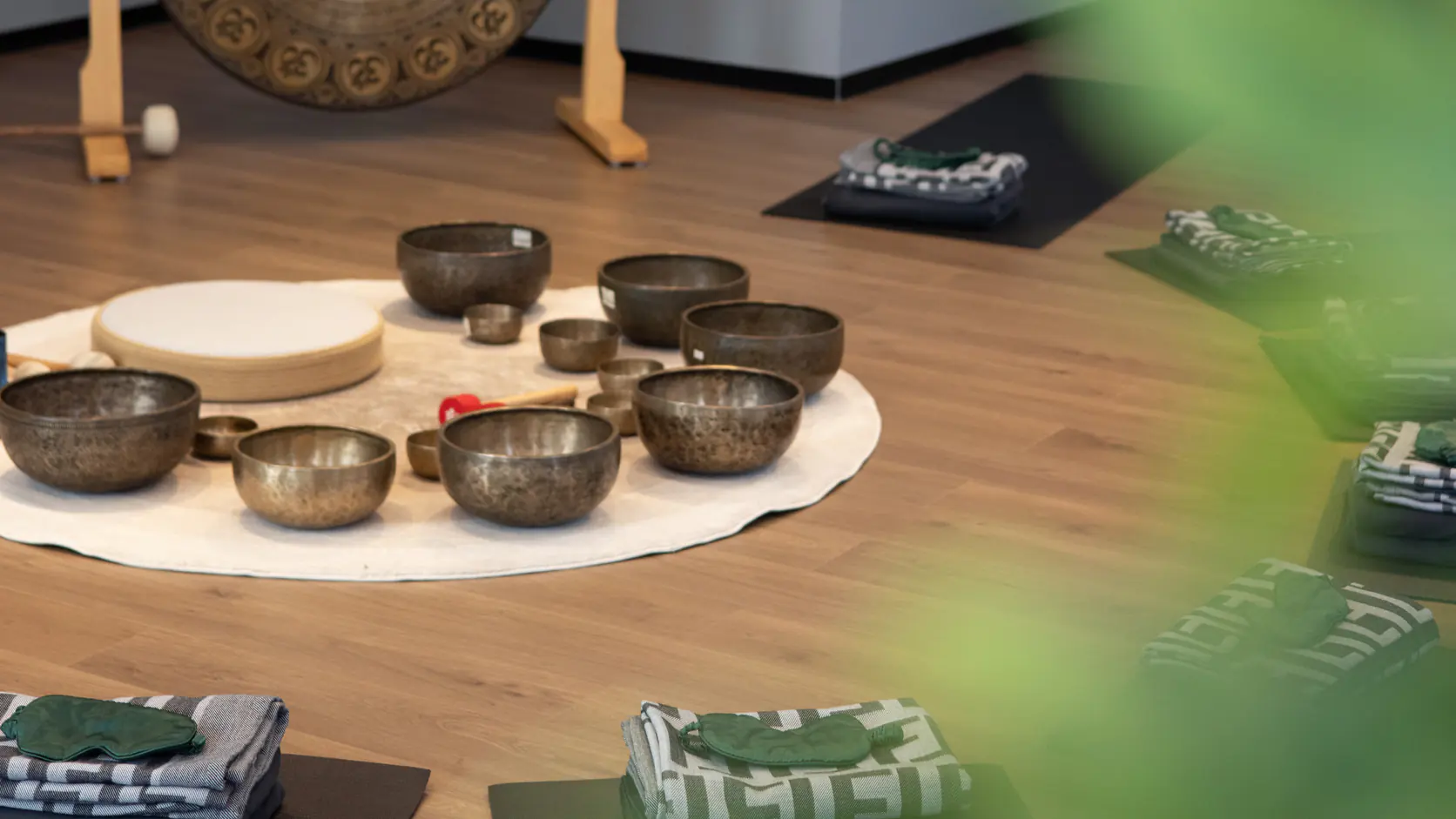
Start with an instrument you can see and handle
Instrument detail from a documented session, with several bowl sizes and playing tools arranged in working order.
The image explains instrument configuration; it does not represent live stock, a specific batch, price or the sound of a selected item.


SAVEABLE COMPARISON
Build the Budget Through One Ordinary Operating Month
Record the project city, exact room, quote date, currency and tax basis, then choose one bookable service as the unit. Keep an amount, basis, payment timing, owner and unresolved point on every line; never prefill an unknown with zero.
| Budget Line | Enter Now | What to Ask the Supplier or Team | How to Judge |
|---|---|---|---|
| 1. Room, Service and Quote Identity | City, exact room, dimensions, adjacent uses, operating window, service name, duration, capacity, version, supplier, date, currency, tax and validity | Fixed total or pricing method, inclusions, exclusions, dependencies, stages, changes and cancellation | Separate offers with unmatched identities before comparing the final total |
| 2. Site Survey and Sound Baseline | Plan, finishes, building-services noise, external and adjacent sources, privacy, movement, accessibility, available hours and existing measurements | Who attends, what is observed or measured, the record delivered and which local specialists remain necessary | When critical room facts are unknown, fund discovery only rather than downstream procurement |
| 3. Design and a Real-Window Listening Test | Service flow, audience, sound roles, placement, capacity, staff actions, stopping route and one complete listen | Drawings, samples, listening rounds, revision allowance, what comfortable and workable means, rights and continuing support | A rendering cannot replace a real listen; revise before expansion when sound or flow is unstable |
| 4. Room, Acoustics and Works | Isolation, absorption, reflection, HVAC and services noise, power, lighting, fire, accessibility, protection, construction and retest needs | Materials, work scope, site assumptions, local approvals, testing, rework, cleaning and reinstatement | Pay only for an identified problem and hold works when local safety or professional responsibility is unresolved |
| 5. Exact Instruments, Setup and Storage | Current item or line, role for each item, dimensions, mass, complete audio, mallets, supports, placement, protection, freight, duties, installation and replacement | Item or batch identity, line price, landed scope, damage, returns, spares and continuing support | Meet necessary sound roles first; range audio, set size and frequency labels do not authorise procurement |
| 6. Staff Training and a Complete Rehearsal | Roles, training hours, practice, full rehearsal, explanation and consent, level and stopping, escalation, hygiene, maintenance and handover | Who teaches whom, observable capability, feedback and further practice, full-rehearsal date and cover for absence or staff change | Reduce the service when it cannot run without a founder or visiting specialist |
| 7. Fixed Cost in an Ordinary Month | Room allocation, core payroll, insurance, software, equipment, depreciation or amortisation, baseline maintenance, retainers and management review | Analysis month, allocation basis, minimum term, minimum payment, volume sensitivity and approving owner | Use an ordinary month rather than launch week; redesign when the fixed commitment exceeds the ceiling |
| 8. Variable Cost per Session | Facilitator time, assistant, setup and reset, cleaning and laundry, consumables, payment or platform fee, refreshments, commission, per-session contractor and cancellation loss | Per-session, per-person or tiered basis, minimum capacity, overflow cost, refunds and no-show treatment | When collected session revenue minus variable cost is not positive, do not hide the problem with more sessions |
| 9. Maintenance, Replacement and Life-Cycle Cost | Instrument checks, worn implements, repair, replacement, refreshers, periodic retest, content revision, storage and end-of-programme reinstatement or disposal | Analysis period, cycle, owner, future-price assumptions and liabilities that survive termination | Compare a low opening cost with long-term operability rather than pricing launch day alone |
| 10. Internal Time and Local Professional Duties | Approval, procurement, contracting, works coordination, fire and accessibility review, roster planning, records, management meetings and finance review | Owner, due date, internal hourly cost or capacity limit, plus the local acoustic, building, legal and finance reviewer | Unowned work is an unpriced dependency, not free capacity |
| 11. Contingency, Change and Exit | Currency, cross-border freight, breakage, delay, rework, staff change, seasonal window, cancellation, early termination and reinstatement exposure | Risk basis, amount or method, release authority, supplier responsibility and executable exit route | Set contingency from real risk; do not offset it with gifts, exposure or forecast revenue |
| 12. Small Real-World Test and Monthly Capacity | Actual service price, discounts, paid attendance, available slots, cancellations, variable session cost, monthly fixed cost and small-test receipts | Session contribution = collected revenue - variable session cost; monthly break-even sessions = monthly fixed cost / session contribution, tested at conservative, base and upper cases | Reduce or pause when contribution is non-positive or required sessions exceed real capacity; expand only after the small test can be repeated |
Prove one bookable service before expanding. Monthly break-even tests an ordinary operating month; it does not establish recovery of startup capital or replace local accounting, tax, building, acoustic or regulatory review.
Can This Sound Healing Space Work Long Term?
A space program starts with the business context, then instrument setup, sound field, staff training, session flow and repeat-visit path.
| Your Question | What to Notice | KONGTONG LIVING View | What to Do Next |
|---|---|---|---|
| Space type | Is it a hotel, retreat, studio, tea space, spa or brand event? | Each space needs a different volume and flow. | Start partnership inquiry. |
| Sound-field control | Are volume, decay, reflection and nearby zones manageable? | Repeatability and low disturbance matter more than instrument quantity. | Share room size and materials. |
| Staff enablement | Can staff operate, explain, maintain and review the setup? | A space program must be executable by the team. | Add training support. |
| Operating loop | Are program frequency, content assets, repeat visits and membership paths designed? | Sound experience should become a sustainable program. | Submit partnership context. |
FAQ
How much does a sound healing space cost?
There is no responsible figure without a city, exact room, service version, date and delivery scope. Separate startup commitment, an ordinary operating month, variable session cost, internal time, contingency and exit, then use a small pilot to expand, reduce or pause.
Can I use a cost-per-square-foot or cost-per-square-metre benchmark?
Only as a very early discovery signal. It cannot capture adjacent noise, existing services, acoustic work, capacity, exact instruments, staff capability or the operating model. State location, date, scope, tax and exclusions whenever a unit rate appears.
Which costs are most often missed?
Room opportunity cost, cover and roster time, setup and cleaning, maintenance and refreshers, internal approvals, damage and rework, cancellation, delay and reinstatement are common omissions. No external invoice does not mean no cost.
Does a larger singing bowl set make the budget more professional?
No. Define necessary opening, anchor, transition, closure and room-coverage roles, then review exact candidates through complete audio, stability, control and long-term listenability. Set size, frequency labels and display impact do not establish fit.
What should be piloted before a full fit-out?
Test the real operating window, background and adjacent sound, placement, nearest listener distance, movement, setup and reset, participant exit and delivery by ordinary staff. Learn from reversible choices before irreversible works.
How do I calculate monthly break-even sessions?
Calculate session contribution as collected session revenue minus variable session cost, then divide monthly fixed operating cost by that contribution. A non-positive contribution or required session count above real capacity is a reason to redesign, not to forecast more aggressively. Have the estimate reviewed in the actual accounting context.
How does KONGTONG LIVING help with a space budget?
KONGTONG LIVING aligns the room, service and quote identity, then reviews exact sound instruments, staff capability, a real-window prototype and an ordinary operating month. We identify what still needs local evidence and return a stoppable pilot and next project path.
Glossary
- Budget Scope
- The city, exact room, service version, date, currency, tax basis, inclusions and exclusions attached to one project calculation.
- Startup Commitment
- Survey, design, works, instruments, freight, commissioning, initial capability, prototype and acceptance needed to establish the service.
- Monthly Fixed Operating Cost
- Room, core labour, insurance, software, baseline maintenance and management cost that does not move directly with one session's attendance.
- Variable Session Cost
- Facilitation, setup, cleaning, consumables, payment fees, commissions and per-session contracting that varies with delivery or attendance.
- Session Contribution
- Collected session revenue minus variable session cost, used to estimate coverage of monthly fixed cost; it is not net profit.
- Stoppable Pilot
- A small service version delivered in the real room by ordinary staff, with complete cost and issue records and a defined stop route.
References and Method Boundaries
These references separate classical theory, modern acoustic or room research and claims governance. The classical five-tone framework is not modern clinical evidence, and KONGTONG LIVING's sound grading is a proprietary instrument standard rather than a medical or clinical classification.
- ISO 21502:2020 - Guidance on project managementISO's abstract describes guidance across organizations and projects of different purposes, life cycles, complexity, size, cost and duration. It supplies scope, stage, responsibility, risk and change questions here, not certification or conformity.
- ISO 15686-5:2017 - Life-cycle costingISO's abstract covers relevant building and constructed-asset costs or cash flows from acquisition through operation to disposal within an agreed analysis period and scope. It supports visibility beyond opening procurement.
- ISO 3382-2:2008 - Reverberation time in ordinary roomsISO's abstract describes procedures, apparatus, positions, evaluation and reporting for reverberation-time measurement in ordinary rooms. It supports budgeting evidence and retest, not a preset target for every venue.
- U.S. Small Business Administration - Break-even pointThe SBA provides the units formula based on fixed cost, unit price and unit variable cost and states that break-even is an estimate. This page treats one service session as the unit without claiming an accounting or financing result.
- UK Competition and Markets Authority - Price transparency summaryThe current UK summary supports clear total prices, mandatory charges and prominent calculation information when a bespoke total cannot be known in advance. It is a UK consumer-pricing reference, not global legal advice.
- ISO 12913-1:2014 Acoustics — SoundscapeA soundscape definition and conceptual framework supporting a planned, designed and managed approach to room sound.
- Huangdi Neijing SuwenA primary classical source for historical Chinese medical sound and five-tone correspondences. It does not establish a TCM origin for singing bowls or clinical evidence that singing bowls treat insomnia, anxiety or other conditions.
- FDA General Wellness: Policy for Low Risk DevicesUsed to distinguish general-wellness language such as relaxation and everyday stress management from disease diagnosis or treatment claims.
- FTC Health Products Compliance GuidanceObjective health-related claims must be truthful, non-misleading and substantiated; KONGTONG LIVING therefore avoids diagnosis, treatment and outcome promises.
- ASA/CAP Health: Therapies (General)UK advertising guidance requiring objective efficacy claims for health therapies to be supported by appropriate evidence; this supports the distinction between subjective wellness use and treatment claims.
How KONGTONG LIVING Brings Sound, Room and Operation Together
KONGTONG LIVING does not sell a sound healing space as a bowl set plus a render. The room, sound roles, exact instruments, staff actions, ordinary operating month and exit route must reconcile before expansion. Traditional Chinese Medicine sound philosophy and the five-tone framework provide the method direction; stable sound, You Sheng, Zheng Yin, Ding Yin, Na Yin, room response and long-term listenability test the real delivery. Professionalism is repeatable, transferable and affordable, not a larger set, a more expensive fit-out or a stronger health promise.
How to Describe a Sound-Space Experience Responsibly
This page provides general project-budget, procurement and operating-estimate education, not architectural, acoustic, fire, accessibility, legal, tax, accounting, financial, investment or medical advice. ISO and U.S. Small Business Administration materials are used only for scope, life-cycle cost, room measurement and basic break-even methods; no certification, conformity, accounting result, financing result or return is claimed. UK price-transparency guidance is jurisdiction-specific and is not presented as global law. Verify local permits, professional duties, taxes, insurance, construction and contract terms in the venue's jurisdiction. KONGTONG LIVING's TCM singing bowl healing is a contemporary non-clinical sound practice for relaxation, mindful listening, everyday stress management and calming wind-down rituals; it does not diagnose or treat anxiety disorders, insomnia or another condition.
Share With the Team Responsible for the Room
Share this with someone planning a sound-healing space: test the room, guest flow, staff and operating model before specifying more instruments.
Before Space Partnership Inquiry
Prepare room and operating details so KONGTONG LIVING can route you toward an event, recurring program, sound corner or full sound-service system.
- Space type: hotel, retreat, studio, tea space, spa, club or brand event
- Room size, materials, capacity and nearby areas
- Expected program frequency and audience
- Use case
- Budget range
- City or room context
- Expected timing for purchase, training or partnership
Tell Us About Your Room, Guests and Budget
Share the project city, plan or room dimensions, adjacent uses, one proposed service, one to three current quotes, budget ceiling and target date. KONGTONG LIVING will identify missing scope, a stoppable pilot, site evidence still required, and the next instrument and staff-capability paths.
Explore Sound-Space Support